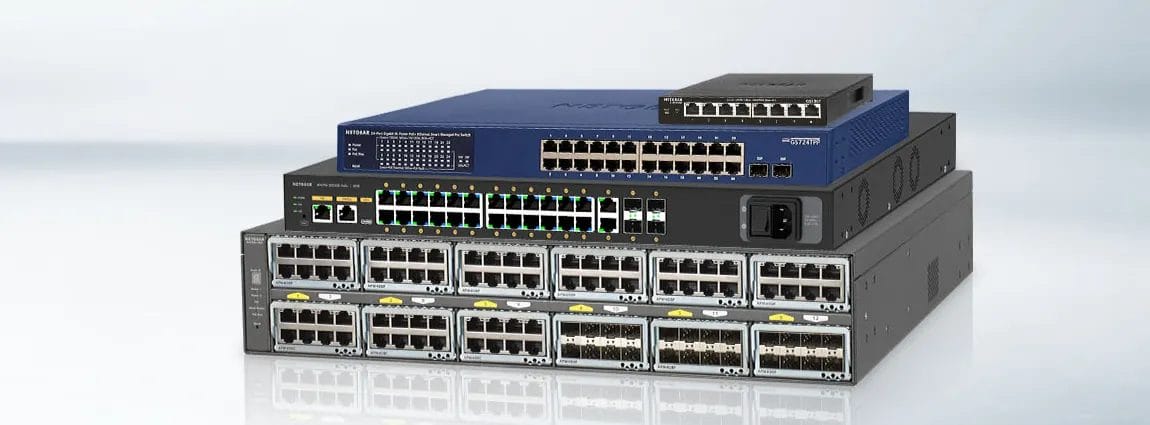
A network switch improves performance by giving every device its own full-duplex link and sending each frame only to the port it’s addressed to. Past that, the gains come from the places traffic piles up: the uplink out of the closet, busy voice and video traffic, and access points faster than 1 Gbps. If you’re […]
Author Archives: Nick Toma
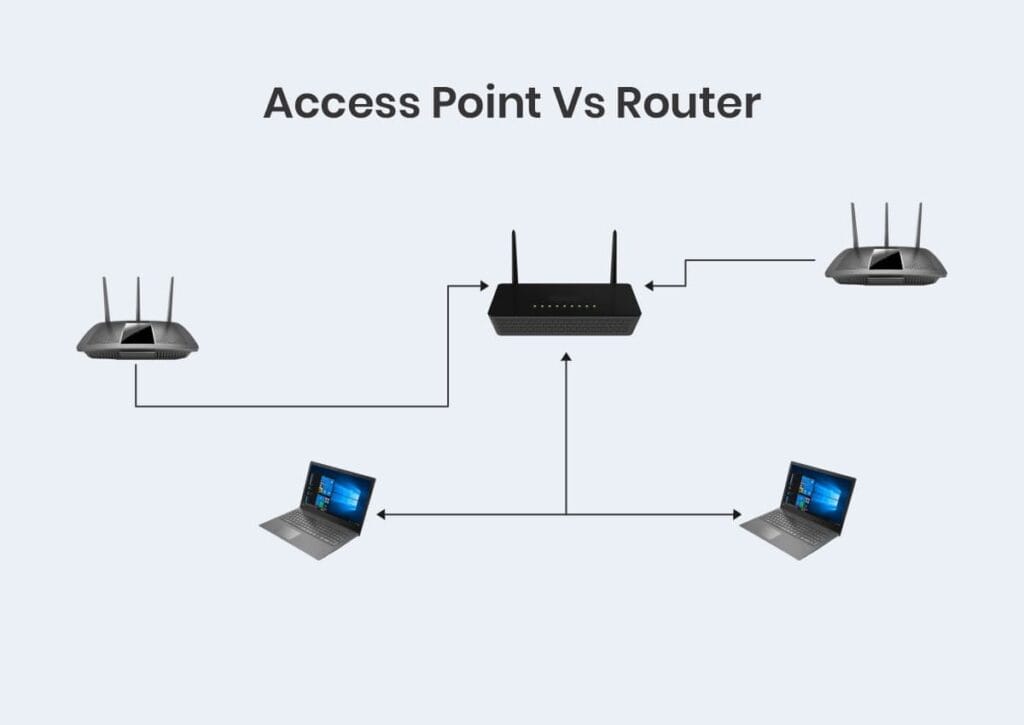
A router connects your network to other networks, most importantly the internet. A wireless access point (AP) connects Wi-Fi devices to your network. The box most small offices call “the router” is usually both in one case, plus a few switch ports. That combined box works for one room. Once you have more floor space, […]
HPE Aruba Networking doesn’t really make routers. What people mean by an “Aruba router” is usually an Aruba gateway (a 9000 Series box that routes and secures a branch), an EdgeConnect SD-WAN appliance, or an Aruba CX switch doing the routing inside a campus. Aruba’s line is built around access points, switches and those gateways. […]
The Meraki MR36 and MR46 are both indoor Wi-Fi 6 access points, managed from the Meraki dashboard. The difference is capacity: the MR46 has twice the radio chains (4×4 vs 2×2), a 2.5 Gbps Ethernet port instead of 1 Gbps, and needs PoE+ instead of standard PoE. The short version: the MR36 is the right […]
The Cisco Meraki MR46 and HPE Aruba Networking AP-555 are both high-capacity indoor Wi-Fi 6 access points. The AP-555 has more radio: an 8×8 5 GHz radio against the MR46’s 4×4, plus two 5 Gbps Ethernet ports. The MR46 is simpler to run, managed entirely from the Meraki dashboard on a single PoE+ port. The […]


