
Juniper, Juniper Networks
Are Juniper Network Devices Worth It for Business?

Jun
For tech administrators and data center operators facing scaling bottlenecks, investing in authentic Juniper network devices offers a resilient alternative to standard commodity hardware architectures. Enterprise data pathways require robust protection lines, high-throughput capability, and unified hardware administration. Sourcing certified routers, switches, and edge security firewalls optimizes system uptimes across cloud-integrated enterprise layouts.
Key Takeaways
- Deploys highly scalable framework topologies designed to expand hardware capacities smoothly without triggering total system downtime.
- Integrates direct threat mitigation parameters right into the processing chipsets to safeguard proprietary customer records.
- Maximizes data packet transmission velocities using automated traffic engineering pathways that slash critical latency delays.
- Simplifies distributed workplace deployment tasks by leveraging automated cloud-managed templates to deploy off-site terminals instantly.
- Consolidates branch edge management controls into unified operational dashboards that reduce administrative overhead.
GET YOUR FREE QUOTE NOW!

What Makes These Hardware Solutions Stand Out in Real Environments?
Securing high-performance core nodes transforms unpredictable data drops from a daily IT headache into a smooth, automated pipeline. Modern corporate networks handle massive data payloads across mixed multi-cloud environments. The reality on the ground is that standard small-business routers crumble under heavy concurrent VoIP streams, database updates, and off-site cloud syncs. Sourcing enterprise-grade components keeps information moving securely through high-traffic branch gateways.
The actual numbers across active enterprise setups show that automated traffic path management reduces manual provisioning tasks by nearly half. Transitioning to dedicated routing chips prevents processing bottlenecks when handling real-time video feeds and machine telemetry. When your core infrastructure handles fluctuating bandwidth demands, having dedicated hardware parsing your packets eliminates the constant latency spikes that disrupt standard office work.
How to Deploy a Resilient Enterprise Routing Architecture
- Source Stabilized Core Nodes: Deploy high-capacity Juniper network devices to anchor your primary data distribution center.
- Standardize Edge Guarding: Configure unified multi-threat protection layers directly at your branch boundary locations.
- Automate Branch Onboarding: Utilize automated cloud-provisioning setups to push uniform security configurations to remote personnel.
System Breakdown: Standard Commercial Hardware vs. Advanced Enterprise Nodes
| Operational Parameter | Basic Commercial Hardware | Advanced Enterprise Node |
| Throughput Scaling | Fixed port distributions | Modular multi-slot expansion bays |
| Security Execution | Software-level basic filtering | Chipset-integrated threat protection |
| Traffic Engineering | Basic priority rules | Automated software-defined routing |
| Provisioning Workflow | Manual unit-by-unit tuning | Automated zero-touch deployments |
Decoding the Commercial Router Lineup for Business Use
Selecting appropriate core components requires matching your specific bandwidth needs with the right physical hardware category. Different series focus on particular enterprise roles:
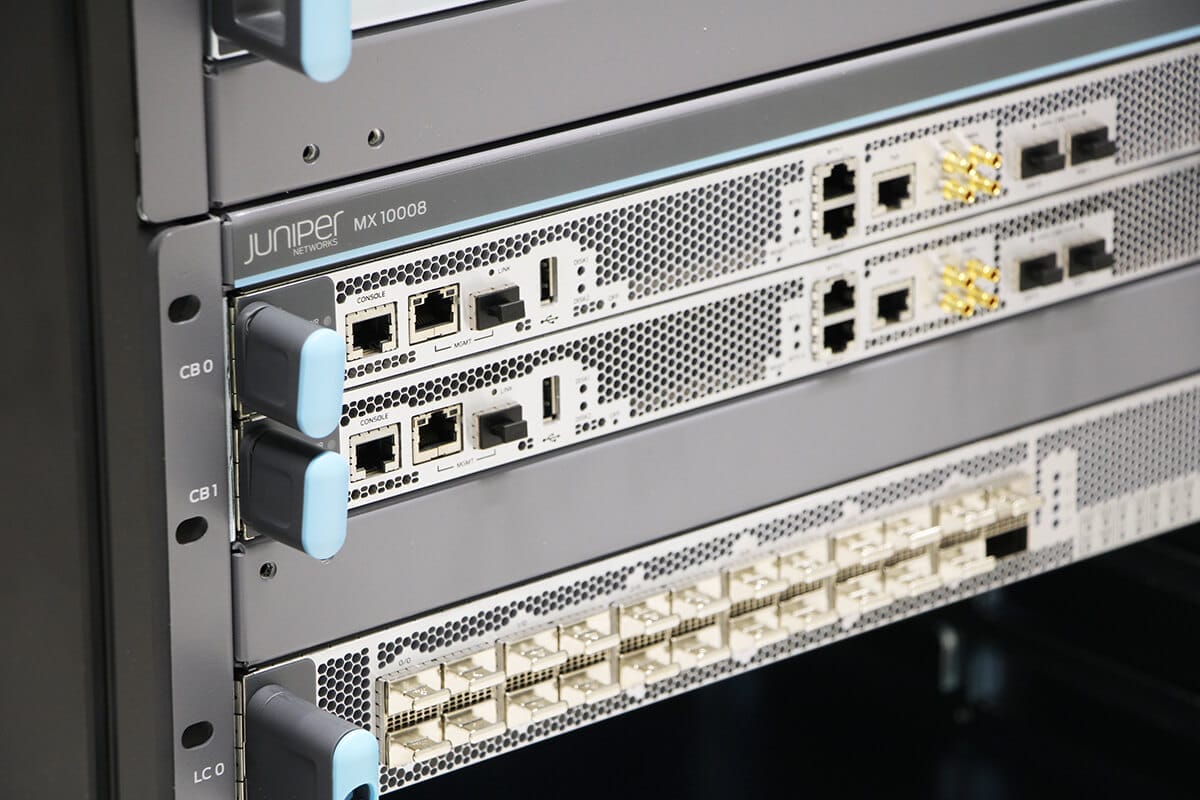
- MX 3D Universal Edge Series: Delivers immense packet switching volumes for large branches using automated software-defined controls.
- ACX Series Access Nodes: Provides hardened, energy-efficient routing frames perfect for field deployments and mobile backhaul sites.
- PTX Series Core Packets: Supplies ultra-high-speed core transit interfaces built specifically for massive data center environments.
- SRX Series Services Firewalls: Fuses high-speed packet routing directly with next-generation threat protection layouts.
GET YOUR FREE QUOTE NOW!
Conclusion
Modern operational footprints require secure links between decentralized assets, field devices, and hybrid cloud servers. Deploying Juniper network devices stabilizes these connections by building automated software-defined wide area networks (SD-WAN) across your properties. This architecture improves application responsiveness, isolates connected IoT devices, and builds a dependable operational foundation.
At Link US Online, we help organizations balance high-speed throughput, hardware reliability, and procurement efficiency. Based in Research Triangle Park, NC, and serving businesses globally since 2011, we specialize in sourcing premier enterprise components from industry leaders like Juniper, Cisco, Meraki, Aruba, HPE, and Ubiquiti. Our deep inventory channels ensure your company secures the exact networking hardware required to sustain long-term business growth without adding unnecessary system complexity.

Ready to modernize your internal data pathways and eliminate network drops? Optimize your office infrastructure by integrating stable, enterprise-grade Juniper network devices into your next deployment cycle. Boost your file transfer speeds, eliminate security vulnerabilities, and establish the robust, reliable connections your modern team needs to succeed. Call Link US Online at (919) 555-0150 today to discuss your infrastructure hardware specifications with a network sourcing expert.
Frequently Asked Questions
Q: Are these enterprise network units suitable for smaller office setups?
A: Yes. The available hardware portfolio scales downward efficiently, allowing smaller companies to deploy entry-tier branches and scale up capacities as business demands increase.
Q: How do these systems handle integrated perimeter defense?
A: The security-focused models combine next-generation packet filtering with encrypted VPN tunnels and automated threat tracking to block unauthorized access at the perimeter.
Q: What particular industries benefit most from these hardware architectures?
A: These systems are widely used across healthcare networks, banking systems, educational campuses, government agencies, and high-volume fulfillment facilities where data integrity is critical.
Q: How does the administration framework compare to other major brands?
A: Administrators value these systems for their clean, modular operating structure and advanced automation options, while other brands focus on broader software utility ecosystems.
Q: Can these components interface directly with existing cloud servers?
A: Absolutely. Juniper network systems feature native integration tools built for hybrid architectures, optimizing data pathways between local hardware and major cloud computing arrays.
GET YOUR FREE QUOTE NOW!
